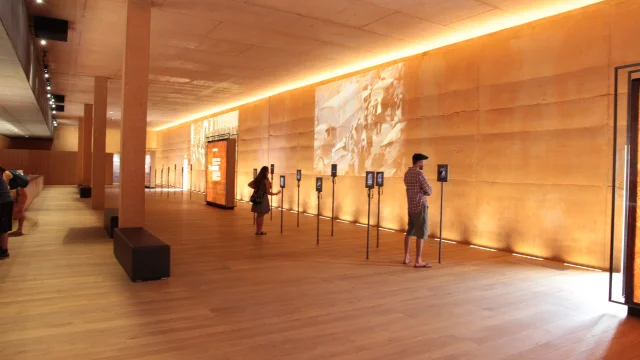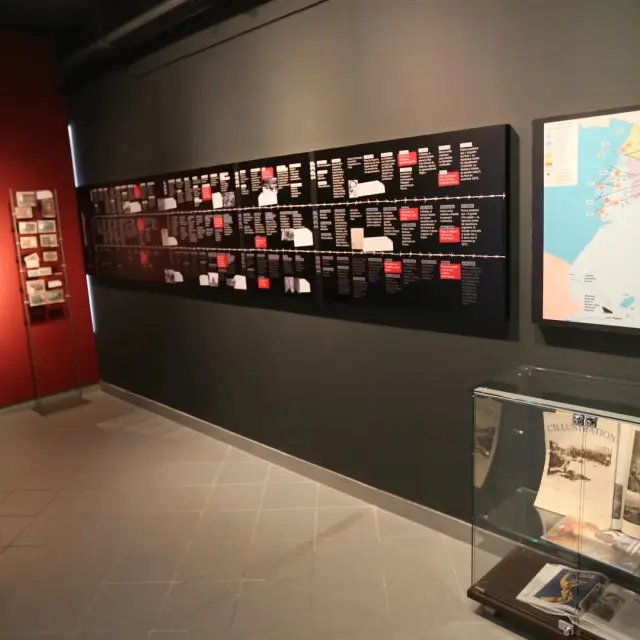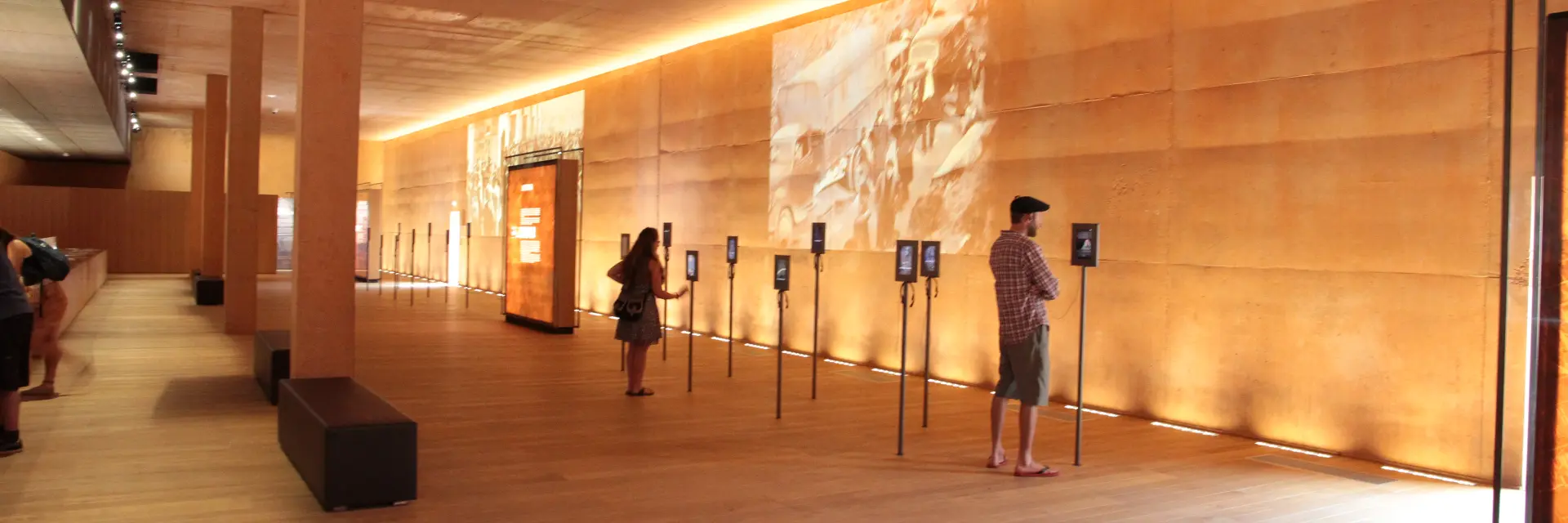
Visitors looking at interactive screens in the large exhibition hall of the Rivesaltes Camp Memorial, with its ochre-coloured walls and subdued lighting.
©

Rivesaltes Camp Memorial

|

Richard BANTEGNY

Land of Remembrance so as not to forget

Walking through history. Feeling. Understanding. Never forgetting.
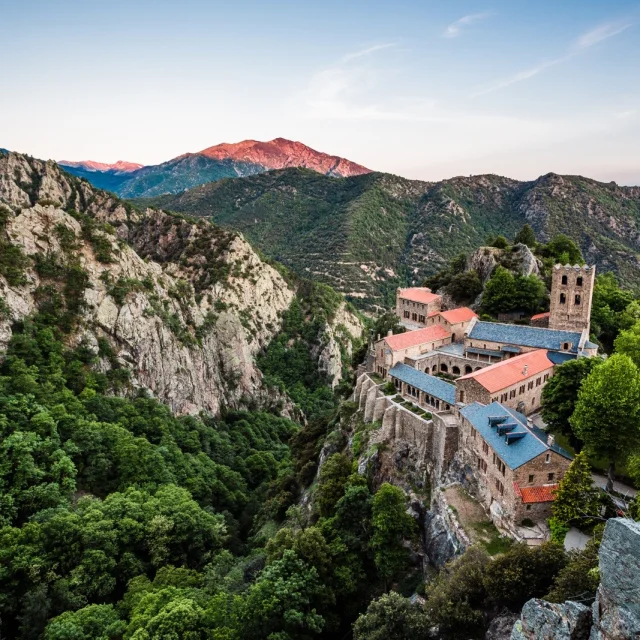
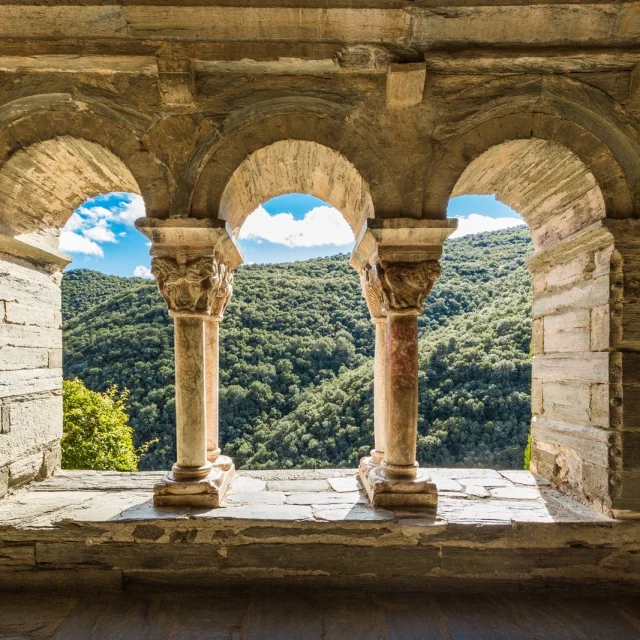
From the beaches of Argelès to the silent walls of the Rivesaltes camp, the Pyrénées-Orientales bear the traces of deeply moving human stories. Exile, solidarity, resilience: here, every place tells a story of a past that still resonates today. Set out to discover these iconic sites, immerse yourself in powerful testimonies, and enjoy an experience that goes beyond a mere visit.
Because remembering also means passing on the story.

Immersion in Rivesaltes Camp Memorial

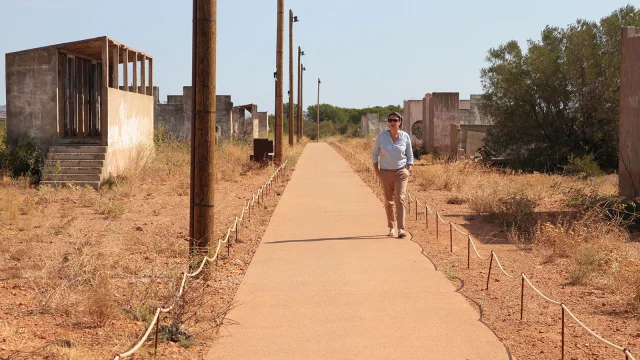
As soon as you arrive atthe Rivesaltes Camp Memorial, you will be struck by the building’s understated, minimalist architecture, designed by the architect Rudy Riccioti to blend into the garrigue landscape.

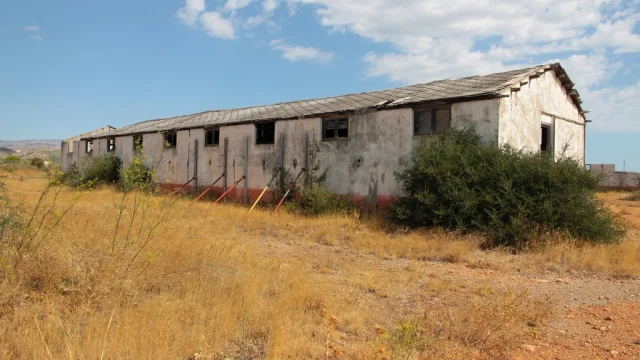
Originally an internment camp during the Retirada, the Rivesaltes site was also used to detain Jewish refugees during the Second World War, then the Harkis after the Algerian War, and others such as the Guineans in 1963.

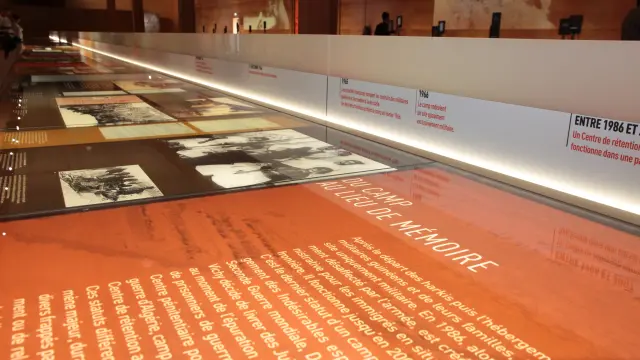
Inside the museum – an educational and informative space for future generations – at the end of a long corridor, you emerge into a vast hall whose walls are lined with screens showing moving films and testimonies. At a large table, young and old alike lean in intently to catch a glimpse of a past brought to light and objects from a time of uncertainty.
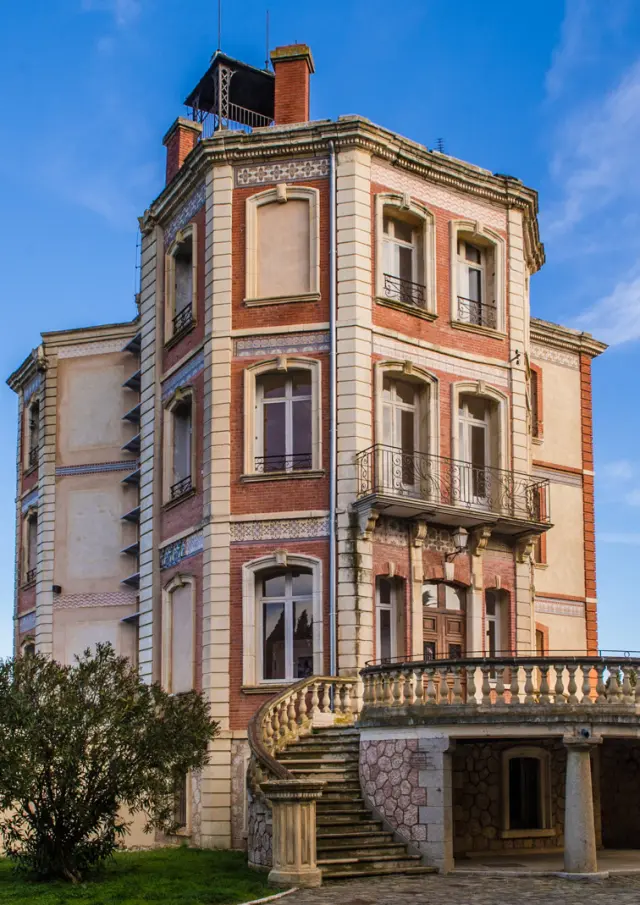
The Swiss Maternity Hospital in Elne, a place of mutual support and solidarity

It is in the most difficult of times that we sometimes find the greatest stories of courage and self-sacrifice, such as that of Elisabeth Eidenbenz, a young Swiss nurse who helped numerous refugees during the Retirada, including many women.

She set up the Swiss Maternity Centre in Elneto enable women interned in the camps at Argelès-sur-Mer, Saint-Cyprien and Rivesaltes to give birth in almost normal conditions. Her workshops and activities, such as singing and reading, offered moments of respite amidst the painful stories of flight, exodus and exile.

During the Second World War, Elisabeth continued to help the most vulnerable women despite the risks involved: between December 1939 and April 1944, nearly 600 children of around ten different nationalities were born there, and a thousand women and just as many children were taken in. Rediscover the exceptional role played by this place with your family: a moving visit offering a different perspective on history!

Closed for renovation

A look back at the Argelès-sur-Mer Memorial

When you visitthe memorial in Argelès-sur-Mer, you will come to understand the significance of the Spanish exodus and the gruelling conditions under which the refugees arrived in France.

Discover how several internment camps – including those at Saint-Cyprien, Le Barcarès and, of course, Argelès-sur-Mer – were hastily set up to house the many exiles.

In the exhibition area open to the public, a range of interactive displays accessible to all visitors help to unfold and explain this historic tragedy of exile and mass displacement.