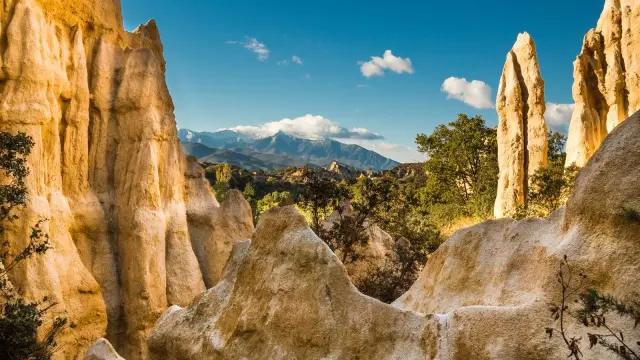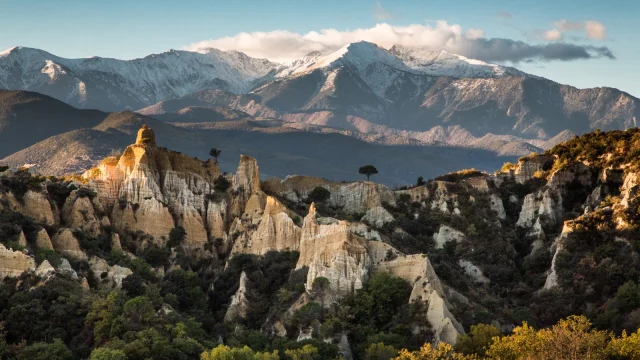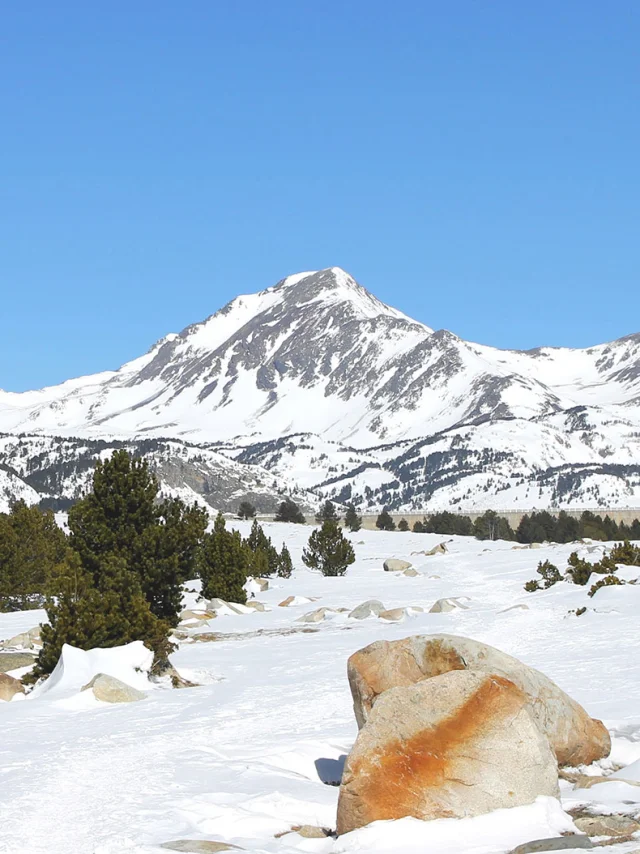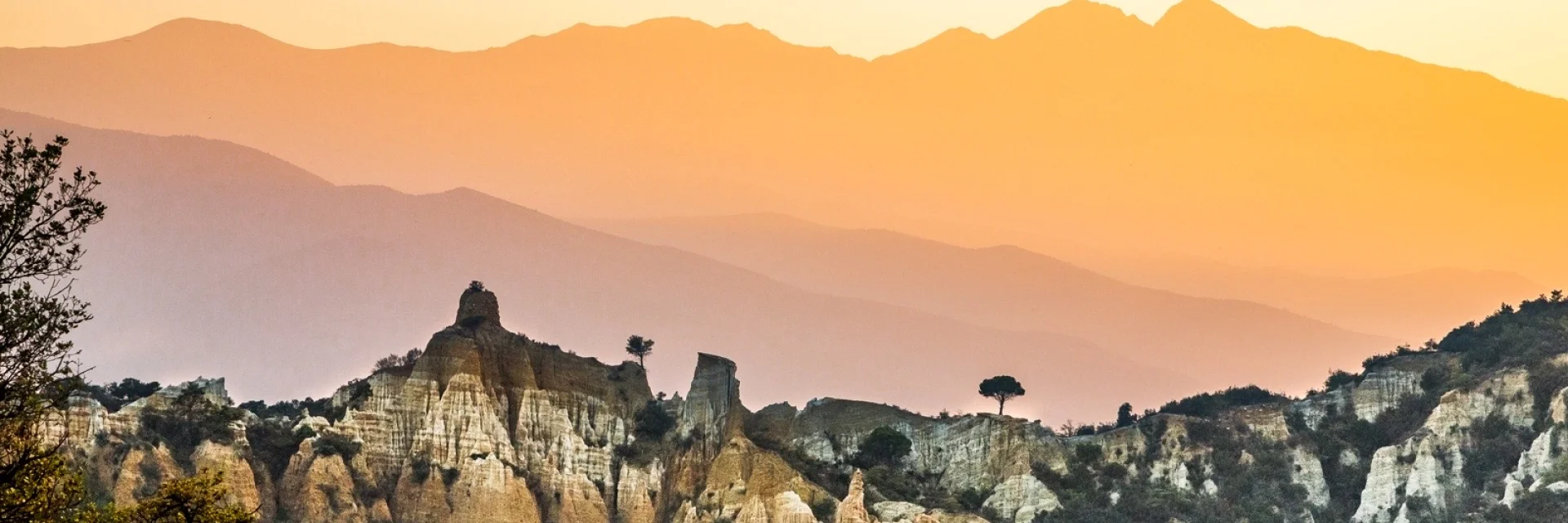

A view of the ‘orgues’ of Ille-sur-Têt in the Pyrénées-Orientales, with rock formations in the foreground and the Canigó mountains in the background at sunset.
©

Canigó and the Orgues d'Ille-sur-Têt

|

© Jc Milhet

Ille-sur-Têt and its organs A nature and heritage getaway

At the foot of the Canigou mountain, the Orgues d’Ille-sur-Têt offer a spectacular natural setting, shaped by erosion over thousands of years. From nature walks to hidden heritage and local flavours, set off on an unforgettable escapade in one of the most impressive sites in the Pyrénées-Orientales.

Brice

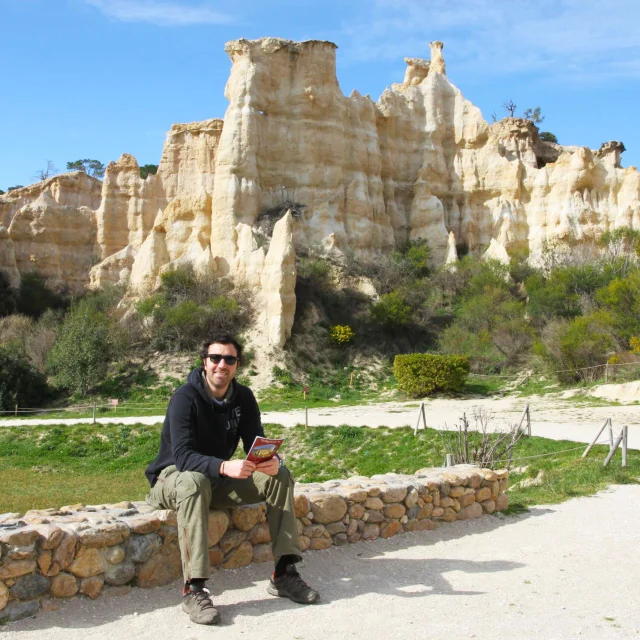
This is Brice, the team rugby player. A real joker who's always in the mood. For this bon vivant, the most important thing is never to skip a meal, because "better than reason, the stomach directs us". Keen on wide open spaces and freedom, he'll guide you to the four corners of the département for terroir walks that only he knows the secret of. So pack your rucksack and head off with Brice for a breath of fresh air.

Discovering Riberal and Ille-sur-Têt

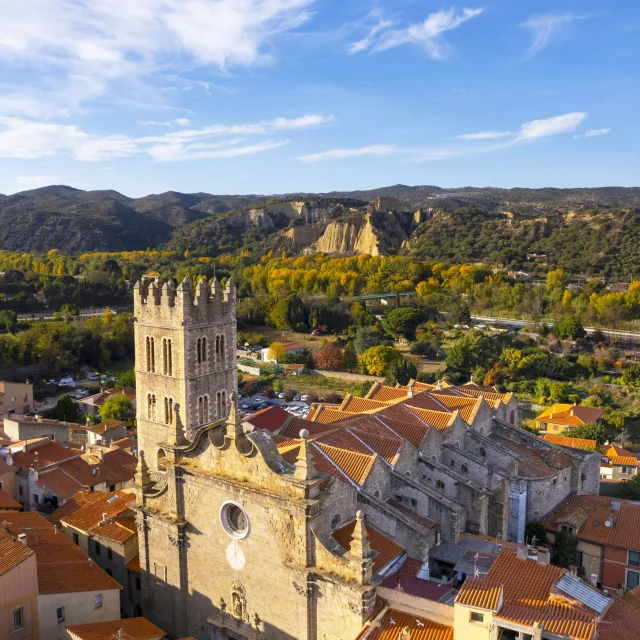
Today we’re heading for the Riberal and, more specifically, the village of Ille-sur-Têt, around 15 minutes west of Perpignan. To give you an idea of the area, the Riberal corresponds to the Têt valley, bordered to the north by the Força Réal lookout point and to the south by the Aspres region. Riberal means “drenched” in Catalan, but don’t worry, we weren’t drenched that day. On the contrary, a bright sky and a moderate Tramontana made the journey with us. On this day in the great outdoors, I’m accompanied by the ‘Dream Team’, or rather the ‘fine team’: Béa for the photos and Amandine as guide, as she lives in Ille-sur-Têt, the starting point of our adventure. Today I’d like to take you on a tour of another corner of the Pyrénées-Orientales department, a trip back in time!
Wild asparagus picking a Catalan ritual

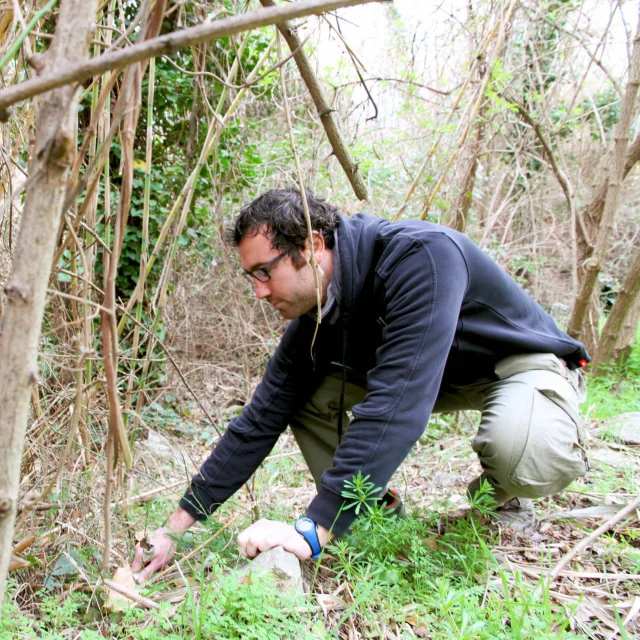
We begin our tour with the traditional asparagus harvest, which you could also call a game of ‘hide and seek’ – you really do need a keen eye! Indeed, with the arrival of warmer weather, this wonderful occasion for sharing with family or friends is part of a ritual, a time-honoured tradition for any true southerner. In our region, from February right through to mid-April, the asparagus is in season. The weather conditions over the last few days have prompted us to explore this wonderful playground. A good spell of rain, followed by bright sunshine and mild temperatures – the perfect combination for setting off in searchof ‘asparagus’ (a plant very common in the south of France, due to the ageing of the asparagus plant). When I mentioned the mild weather, I can tell you that temperatures hovered around 25°C across the whole of the Roussillon plain (and I’m not even from Marseille!). What a joy it is to live in the Catalan region!

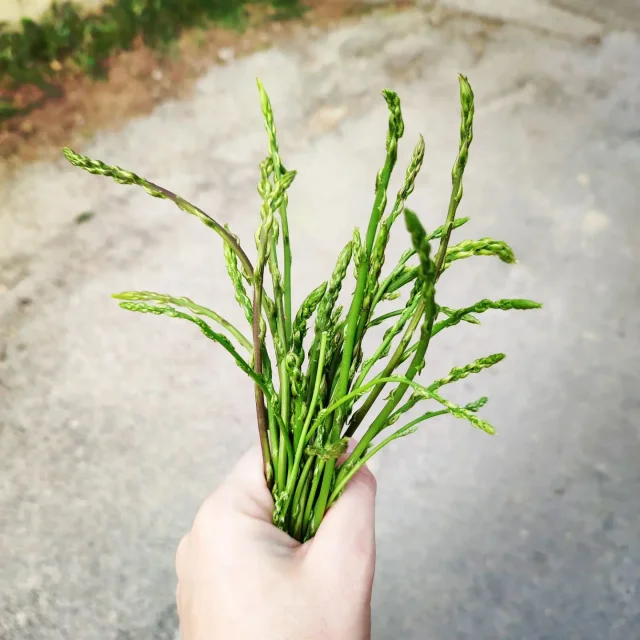
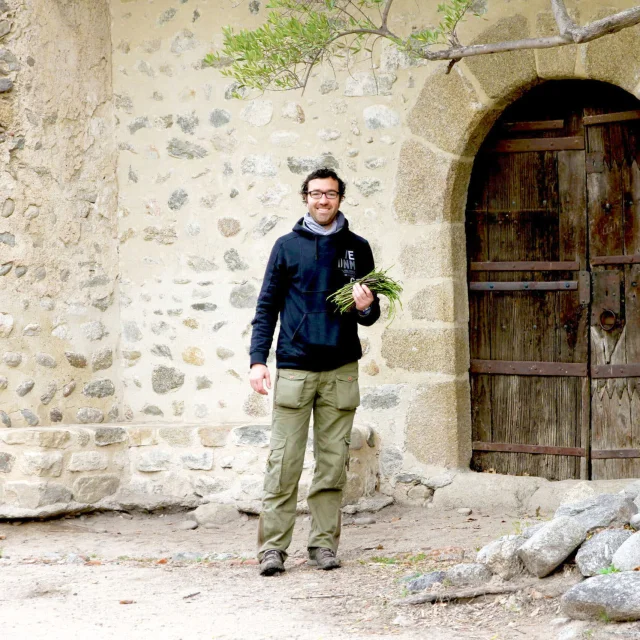
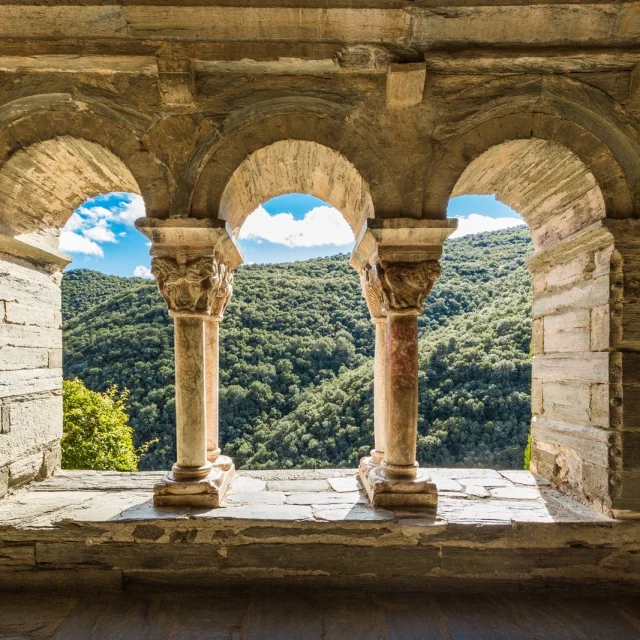
Back to our asparagus. Normally, not a word about where to pick them. It’s like with mushrooms, when you ask, you always get the same answer: “over here, over there, in that corner…”. In short, you never know because it’s all secret! Today, I’m going to do you a favour. I’m heading for thechurch of Saint-Sauveur de Casesnoves, in the commune of Ille-sur-Têt. As well as walking through unspoilt countryside, you’ll discover a well-hidden cultural heritage. Casesnoves is an old abandoned hamlet and one of the first villages on the banks of the Têt. Here you can admire the partly renovated church, the remains of the square-shaped main tower and the ruins of overgrown dwellings. To harvest the wild asparagus, you’ll have to be prepared to hike a long way through the sometimes dense flora, but above all, you’ll need a good eye. After 1? hours of walking and searching, it’s time to stop and take stock of the morning. And the result is very satisfying. I’m carrying a beautiful bunch of wild asparagus, the fruit of a great team effort.

Gourmet break Wild asparagus omelette

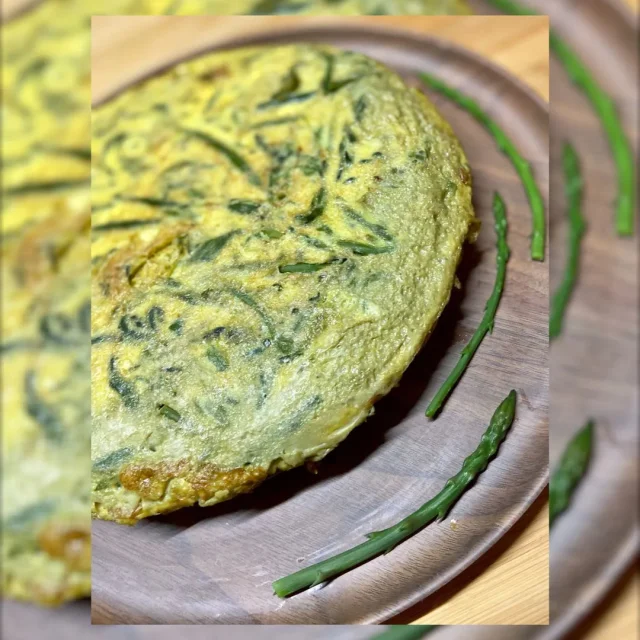
To be honest, I’m already imagining them on my plate, flavouring a wonderful omelette. It’s almost time for lunch. Amandine, our guide for the day, offers to welcome us to her home for a pleasant moment of sharing. You may have already realised how much I love the outdoors, but I also attach great importance to gastronomy.

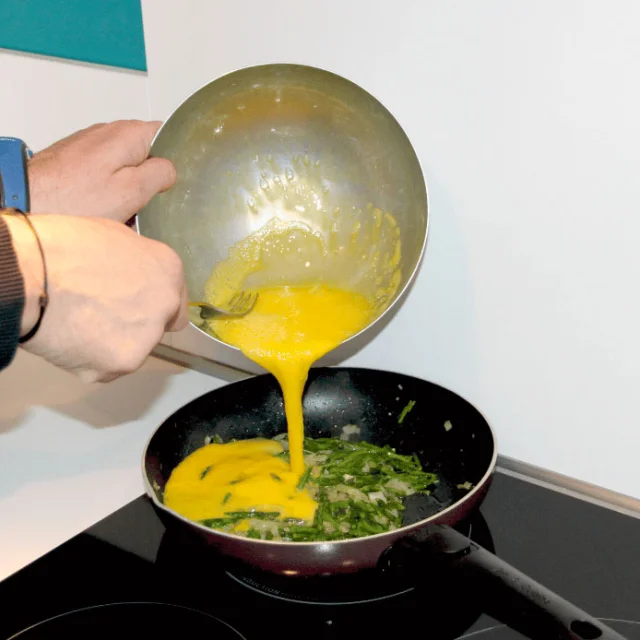
So, without delay, I’m taking my place behind the stove, with Amandine’s help, to make the traditional asparagus omelette. It’s not very complicated, just fry the asparagus tips with a little shallot in a hot pan. Meanwhile, beat the eggs, add them to the pan and leave to cook. That’s all there is to it, and now it’s time for the tasting, my favourite part.

The Organs of Ille-sur-Têt a unique natural site

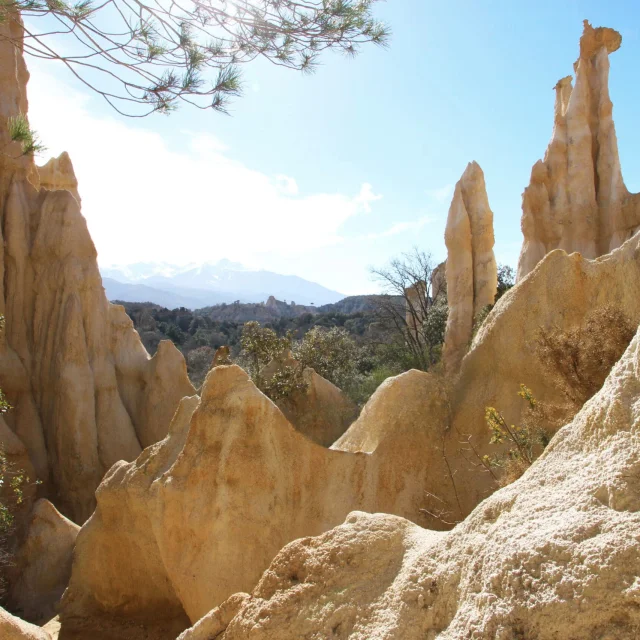
With our bellies full, we hit the road again, heading for the Orgues d’Ille-sur-Têt, for a walk in spectacular surroundings. The Orgues d’Ille site is a must-see in the Pyrénées-Orientales. It’s a unique and exceptional heritage site, watched over by the protective gaze of its majesty, the Canigó (the sacred mountain of the Catalans, rising to an altitude of 2,784 metres).

Once we arrived, we left the car in the car park at the visitor centre and picked up an explanatory brochure, which would come in very handy later on. Finished, we set off on our walk towards this very special place. Don’t worry, this climb is accessible, as you’ll be taking a path about 800 m long. All along the way, you’ll come across numbered wooden stakes, corresponding to the stops listed in the document (this is when you need to get out the famous explanatory brochure you picked up at reception). After a 15-minute walk, here we are!

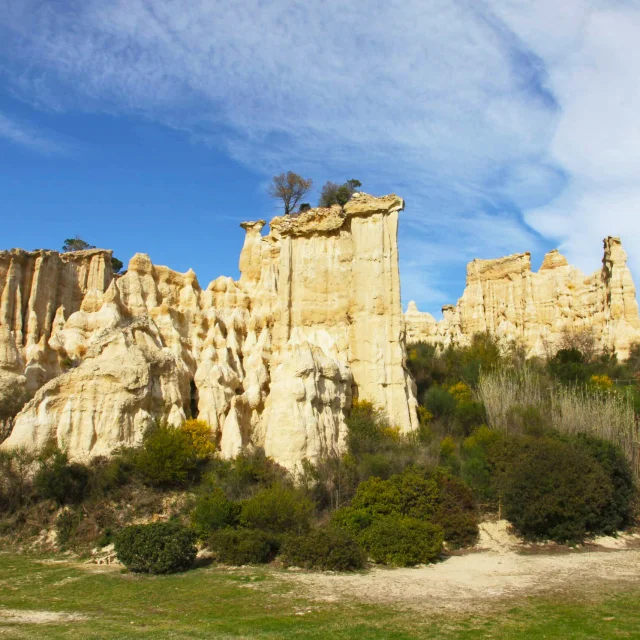
The Orgues site opens up like an amphitheatre. The place is breathtaking. It’s a sight to behold, and I can’t help thinking that we have nothing to envy the Americans and their Grand Canyon of Arizona… The resemblance is real (granted, I may be getting a bit carried away, but hey, it’s so beautiful).

Unusual

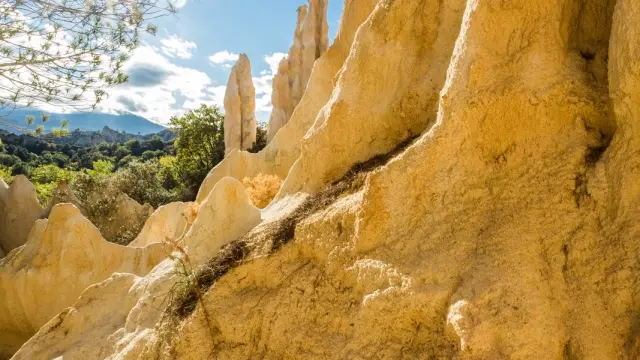
The spectacular ‘fairy chimneys’ of the Orgues change shape over the years, sculpted by rain and wind. Some of the columns are strangely reminiscent of human silhouettes or giant sandcastles. With a little imagination, every visit becomes an observation game!

Suddenly, I feel very small in the middle of this natural immensity: walls sculpted with gigantic columns, 10 to 12 metres high, face me. A unique and arid landscape, with colourful reliefs sculpted by water in clays and sands taken from the Pyrenean massif. The combination of the elements – earth, water, wind and solar fire – has created a symphony of shapes and colours that capture the imagination. Seemingly static, this landscape is in fact constantly changing. Each time it rains, old forms are erased and new ones are sketched out. Erosion is the master of this place.

Stunned by this environment, we continue our walk and take the time to contemplate these isolated peaks, known as “fairy chimneys” because of the hard upper part that covers them. We could sit for hours admiring this grandiose spectacle. Before leaving the site, we head for the labyrinth. Rest assured, this is the only labyrinth where you won’t get lost, so you can imagine…

The day in review

This trip to Ille-sur-Têt was a gourmet, convivial and spectacular interlude. Between picking wild asparagus, sharing an omelette with friends and marvelling at the Orgues, every moment was a discovery. We left with the impression of having travelled back in time and through nature, in the heart of the Catalan countryside. A simple but rich day, where heritage, landscapes and local traditions combine to create an unforgettable experience.

Practical info The organs

Location
15 minutes west of Perpignan, easily accessible via the N116.

Length of visit
Allow around 1h to 1h30 to explore the site and take full advantage of the panoramic views.

Access & parking
Free parking near the visitor centre. Pedestrian access via a footpath (800 m).

Worth knowing
Ticket office closes 1 hour before the site closes.

Preparing your stay

Plan interactif : 1 lieux répertoriés.

  • Lieu sans nom
Do you enjoy this experience? Have you done it yourself and want to share it with your friends?

More experiences in the P.O.