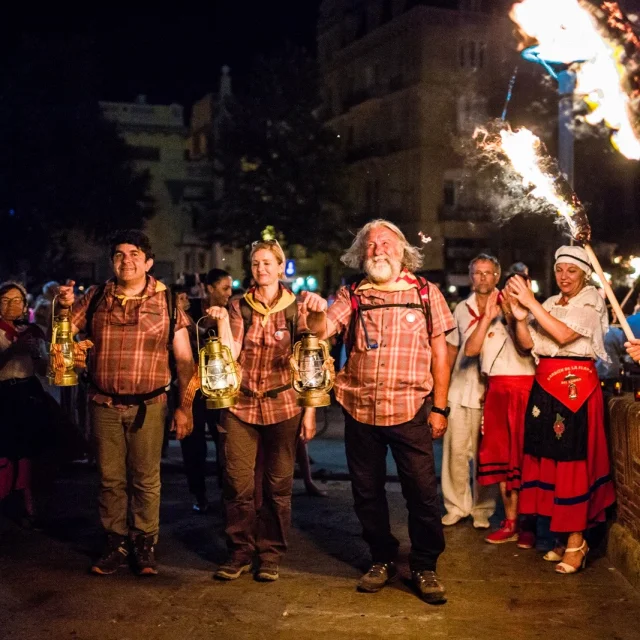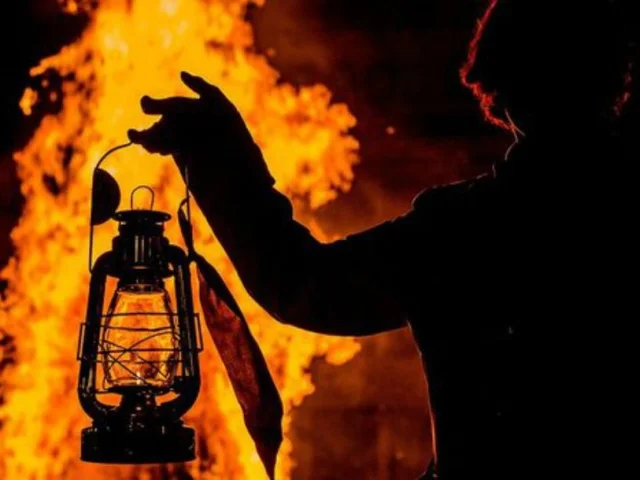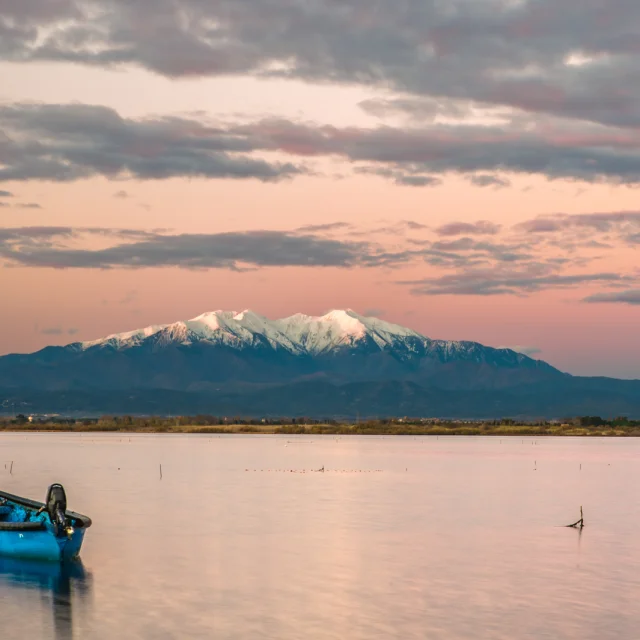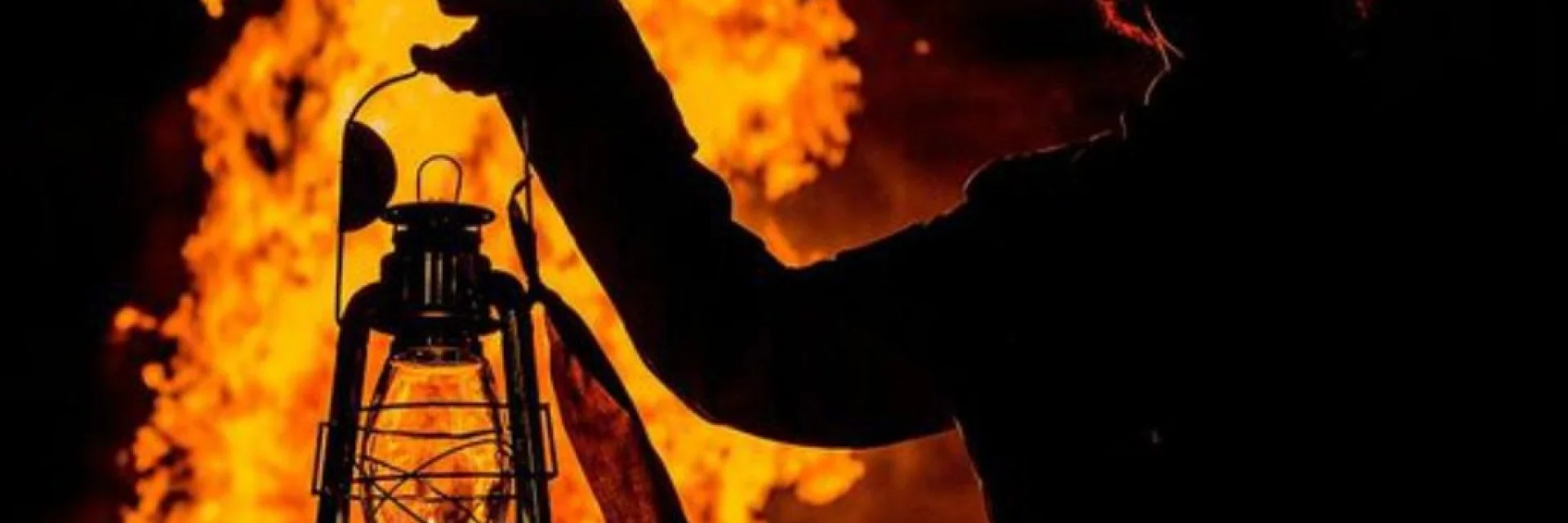
A figure holding a lit lantern in front of the Saint John’s Day bonfire in Perpignan.
©

St John’s Day Bonfires

|

ADT66

Midsummer bonfires in Perpignan A fiery Catalan tradition

In Perpignan, St John’s Day doesn’t just mark the summer solstice: it sets the streets, hearts and minds ablaze. Between popular fervour and the transmission of Catalan traditions, this night of 23 June transforms the city into an open-air theatre, around a sacred fire from the Canigou.

Gloria

Her name is Gloria. She's a concentrate (like milk) of savoir vivre, culture and unusual anecdotes. She knows how to sprinkle that little sweet taste over the stories she tells you with a devouring passion (Pierre Bellemare should know better). She'll tell you about the stones, the frescoes, the stained-glass windows or that writer lost in the garrigue.

A magical night to celebrate summer

How about celebrating summer on the shortest night of the year? I’ll take you to the Castillet, where the big crowds are already gathering. I tell myself that here in Perpignan it’s Saint-Jean, elsewhere it’s the summer solstice, a key moment in the year when day is stronger than night, when movement and the desire for renewal sweep away the weight of the past. To do this, we have to make room and get rid of the old clothes that cling to our skin, like a desire to purify ourselves through fire, a joyful fire like the promise of a sunny summer.

In the Pyrénées-Orientales, this ancient tradition was reinterpreted by a group of young Catalans who, in the 1950s, were dreaming of freedom and fraternity. All this around the Canigou, celebrated by Jacint Verdaguer, a Catalan priest who climbed the mountain in a cassock and patent leather shoes.
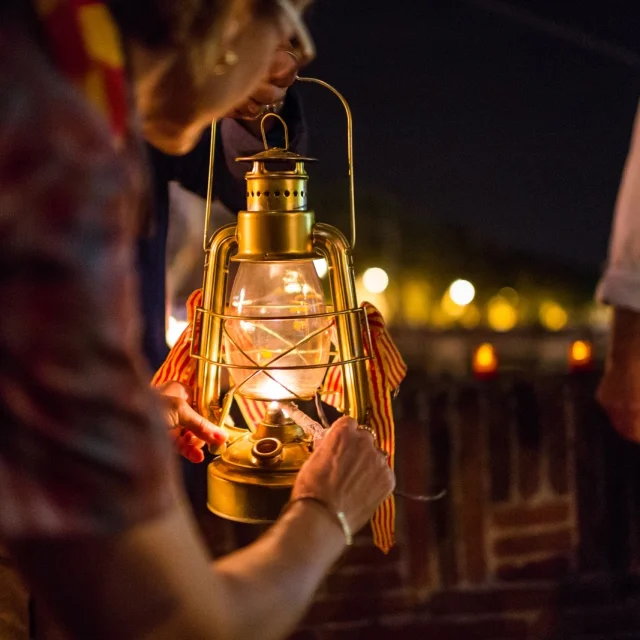
A tradition steeped in Catalan history

The Canigou became a symbol of identity, and solidarity and fraternity were gradually established as the values of this summer night. The idea of bonfires to light up the night (Spain was a dictatorship at the time) took shape, and a small permanent flame was kept all year round at the Casa Pairal museum in the Castillet to rekindle the Canigou fire.

Each village would carry a bundle of wood to fuel the great bonfire at the summit, visible from the plains of Roussillon and Ampurdan. From then on, everything became a reason for meetings, exchanges and “trobada”. On the morning of 23 June, the flame, a symbol of fraternity and a link between Catalan-speaking peoples, was welcomed with great fanfare as it arrived by bearers on board various means of transport, from boats to bicycles, planes and motorbikes. Which reminds us of a recent event: the Olympic Games in the summer of 2024!

To find out more

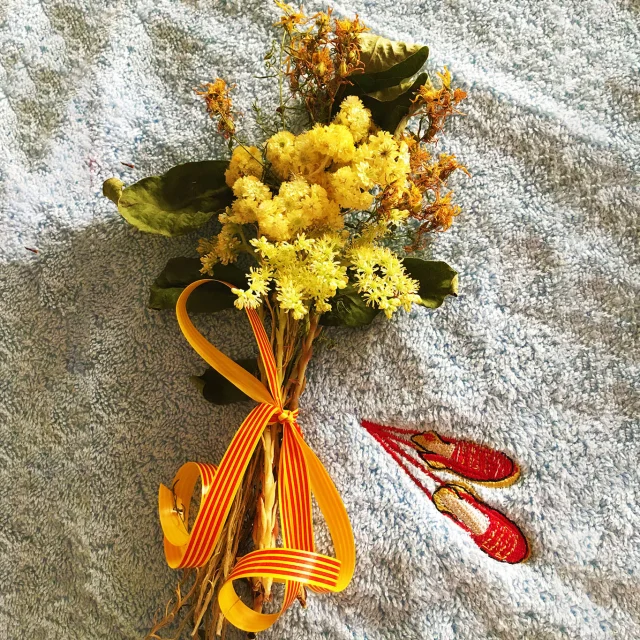
The Canigou flame, rekindled each year at the summit of the sacred mountain, is carried to Perpignan to light the cauldron at the Castillet. Tradition has it that young men go out into the countryside to gather selected herbs, still wet with morning dew. These plants, with their magical properties, will be used to make ramallets de Sant Joan (Saint John’s bouquets), which will then be distributed to anyone who asks for them. These good luck bouquets are kept in the house until the following year, when they are replaced by new ones. Each element has meaning: the bouquet, the shared coca, the rising of the flames, etc., all gestures that link people to nature, to the community and to the collective memory.

The festival in Perpignan: between emotion and spectacle

A festive atmosphere in the city centre

A feverish heat wave is sweeping through the city. The café terraces are filling up and there’s a festive air in the air as the afternoon draws to a close. A procession of bagpipers has set the tone, and people are enjoying the anticipation. The crowd is already thronging to see the cavalcade arrive, while on stage the espadrilles of the folk dancers clatter to the rhythm, the giants slowly strut their stuff, a talented tenor charms the audience and a singer from the other side of the world sings a song by Jordi Barre, a regular at the Festa Major. Bouquets of walnut leaf, immortelle, St John’s wort and orris, set with a ribbon in the Catalan colours, are carefully distributed and the ‘coca’ (brioche) of Saint John is shared.

The arrival of the flame and the fireworks show

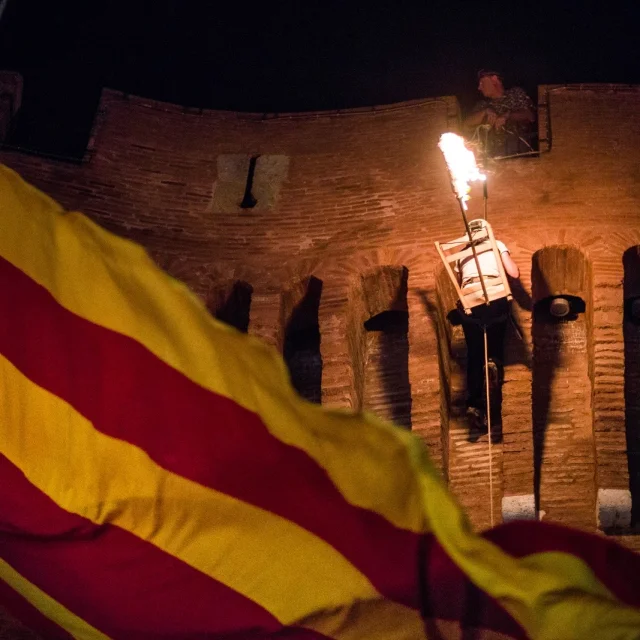
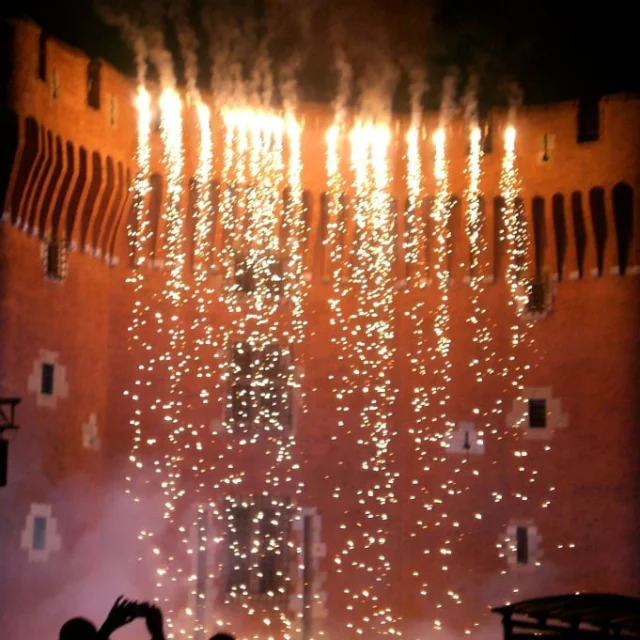
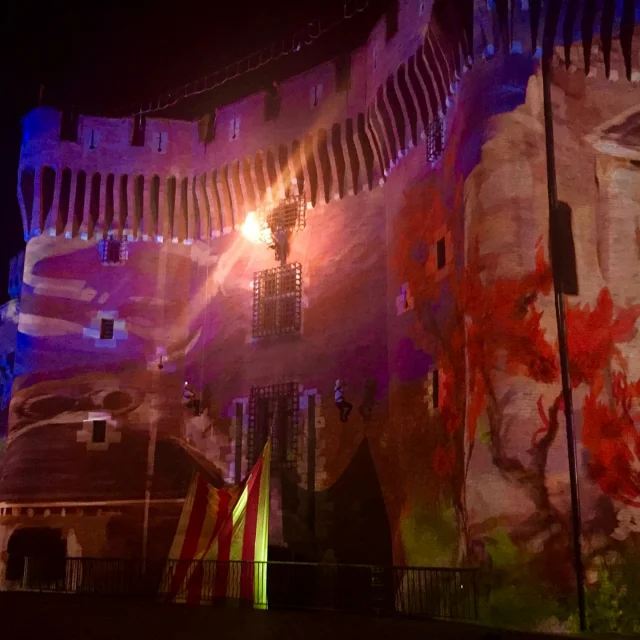
When the runners arrive, carrying the flame like messengers of peace, the Mayor lights the cauldron and the climbers, driven by the desire to outdo themselves, scale the facade of the Castillet to carry the flame and the flag (senyera) to the highest point. Mapping on the red brick walls pays a dreamlike, brilliantly illustrated tribute to the Canigou. Along the Basse, the trees and quays seem to light up, while the top of the Castillet suddenly bursts into flames as streams of fire shoot down the façade. It’s a breathtaking spectacle.

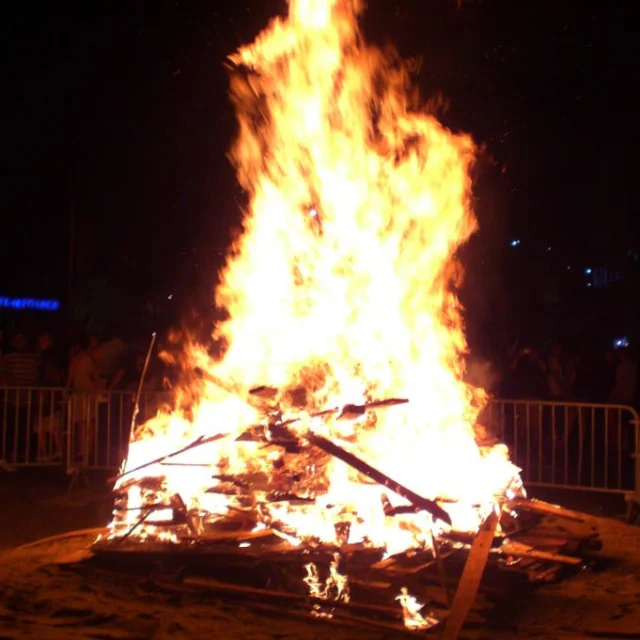
At the crossroads, a safe bonfire consumes old furniture and objects that people want to get rid of, sparks fly towards the shortest night of the summer, and we think fondly of all those who, in their own way, celebrated this summer solstice in the villages of the Pyrénées-Orientales.

The evening in review

Between collective emotions and visual wonder, the evening of the Feux de la Saint-Jean in Perpignan leaves a powerful impression. It’s an immersion in the Catalan soul, where tradition meets modernity, spectacle meets the sacred, and where locals and visitors alike come together in an atmosphere of human warmth and unity. It’s an event with a strong identity, and one you’ll want to experience at least once.

Practical info

 Midsummer bonfires

Date: every year on 23 June, the eve of St John’s Day.

Venue: Perpignan city centre, mainly around the Castillet.

How to get there:
– By train: Perpignan station, a 10-minute walk from the Castillet.
– By car: car parks around the city centre (please note that access is restricted in the evening).

Times: entertainment in the afternoon, arrival of the flame and lighting of the fire at around 10pm.

Good to know:
– The events are free.
– Make sure you get there early to get a good seat.
– Safe, festive, family atmosphere.
– The city can be noisy and crowded: plan ahead for children or people with sensitivities.

Preparing your stay

Plan interactif : 1 lieux répertoriés.

  • Lieu sans nom
Do you enjoy this experience? Have you done it yourself and want to share it with your friends?

More experiences in the P.O.